
Isaiah Insights #1

Isaiah Insights #1

Warren E. Berkley – wberkley.podbean.com

Rebellious Children, Isa. 1:2

God’s people in Judah and Jerusalem are “on trial.” God is the Judge as well as the offended party, with His servant Isaiah announcing the case against the people. This was during the reigns of kings Uzziah, Jotham, Ahaz and Hezekiah, kings of Judah. The offended party is the Heavenly Father, disappointed in His children.

Hear, O heavens, and give ear, O earth; for the Lrod has spoken: “Children have I rearerd and brought up, but they have rebelled against me.”

The first step into this passage is emotional, especially for parents. And most especially for parents who have known this disappointment.

There is that natural affection of mothers and fathers for their children. This prompts desire, effort, work and hope. This is why parents become engaged with instruction, influence, wise discipline, warmth and all good provision for their children. Inside all this work there is hope, that the children will be responsive and sensible. That they will grow up to be mature and useful adults, that the hope of the parents might be realized and satisfying.

Yet, in spite of all effort and prayer otherwise, since children have free will, disappointment is a very real possibility. There is no heartache like it; no stress that compares, when parents realize their children have chosen a destructive path in life.

This resembles how God felt about His people in Judah and Jerusalem in the time of Isaiah and these kings.

Now, God was and is the perfect parent, the Father in heaven. He formed a nation from the offspring of His servant, Abraham. He brought them out of bondage. He gave them law and leaders and guidance and promises.

Their response? They rebelled against their Father. Isaiah’s duty was to convey to these wayward children, the deep disappointment of their Father.

Pause here for self-examination. Am I pleasing my Father? Is He disappointed in how I’ve turned out? The way out of rebellion is repentance.
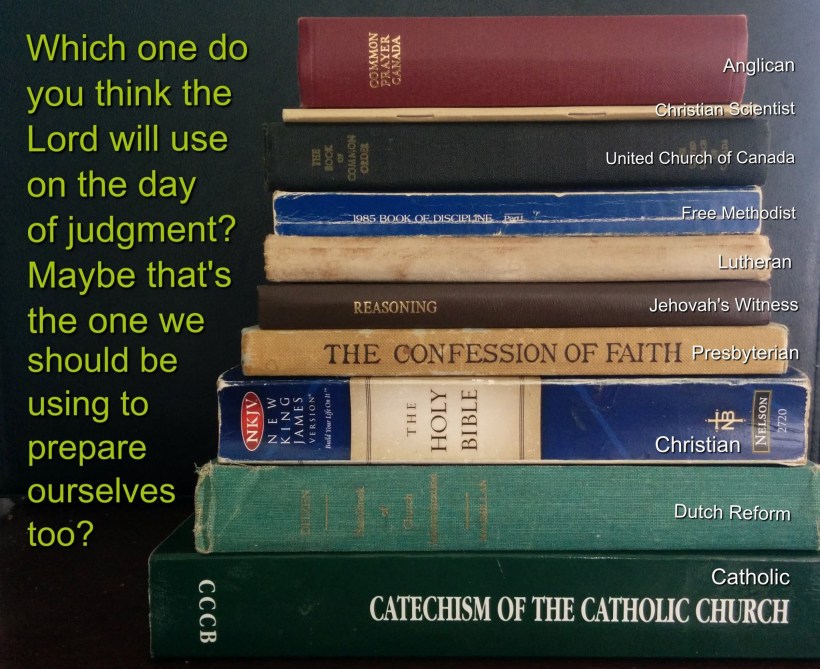
Isaiah Insights Podcasts #1


Heb. 10:26-39

Fearful Expectation of Judgment

Hebrews 10:26-39

What happens if a Christian leaves Christ, never to return? Please listen:

26 For if we go on sinning deliberately after receiving the knowledge of the truth, there no longer remains a sacrifice for sins, 27 but a fearful expectation of judgment, and a fury of fire that will consume the adversaries. 28 Anyone who has set aside the law of Moses dies without mercy on the evidence of two or three witnesses. 29 How much worse punishment, do you think, will be deserved by the one who has trampled underfoot the Son of God, and has profaned the blood of the covenant by which he was sanctified, and has outraged the Spirit of grace? 30 For we know him who said, “Vengeance is mine; I will repay.” And again, “The Lord will judge his people.” 31 It is a fearful thing to fall into the hands of the living God.

32 But recall the former days when, after you were enlightened, you endured a hard struggle with sufferings, 33 sometimes being publicly exposed to reproach and affliction, and sometimes being partners with those so treated. 34 For you had compassion on those in prison, and you joyfully accepted the plundering of your property, since you knew that you yourselves had a better possession and an abiding one. 35 Therefore do not throw away your confidence, which has a great reward. 36 For you have need of endurance, so that when you have done the will of God you may receive what is promised. 37 For,

“Yet a little while,
    and the coming one will come and will not delay;
38 but my righteous one shall live by faith,
    and if he shrinks back,
my soul has no pleasure in him.”

39 But we are not of those who shrink back and are destroyed, but of those who have faith and preserve their souls.

This is not about Christians who struggle but grow; who make mistakes but repent and continue to learn and do better. This says, “…if we go on sinning deliberately.”

The prospects are not good at all, if we leave the only Savior; if we abandon the only sacrifice for sin. This is one of the most frightening passages in the New Testament. And it tells me – as I appreciate and adore God for His grace, I must not dismiss His wrath.

The call to action is verse 36 – “for you have need of endurance, so that when you have done the will of God you may receive what is promised.”

(This is being posted on my 72nd birthday. One of the great blessings I’ve had in my life is the opportunity to share the meaning of God’s Word and urge people to do the will of God, as I accept the challenge myself. Thanks for reading this blog.)

Treasures in Heaven

Treasures in Heaven

by Mark Roberts

HAVE YOU BEEN to the funeral home? Does your car break down? Has anything ever been stolen from you? Do you ever get sick? Have you had the frustration of buying something, and it quit working the day after the warranty expired?

All of these questions illustrate one truth: this world is a decaying, rotting, disintegrating place in which to live. No matter how hard one tries, things still break, robbers continue stealing, and people still die. This world is, quite literally, going down the drain.
Amazingly, mankind chooses to ignore the obvious. What many people seek the most, work the hardest for, and put at the top of their priority lists are all the things that shall surely decay and waste away. This world is in a mad rush to acquire and have things it cannot keep. Sadly, many Christians are no better. We know Jesus said, “lay up for yourselves treasures in heaven, where neither moth nor rust doth corrupt, and where thieves do not break through nor steal” (Matthew 6:19–20), but has this verse become part of who and what we are? How can I daily live out the truth that I have an unchanging reward?
First, I need to understand what the Bible promises me about heaven. In 1 Peter 1:4, we are told that through Christ we obtain “an inheritance in corruptible and undefiled and that does not fade away, reserved in heaven for you.” Heaven is not transitory. It doesn’t break down, have maintenance problems, or wear out. It will not end, be destroyed, or decay and die. There will be no sin or wrongdoing there. In fact, we may safely say that heaven is everything that this world is not. Perfect paradise will go on for all eternity.
Yet, it is the last part of 1 Peter 1:4 that really catches my eye: “reserved in heaven for you.” Peter confidently affirms that God wants you to go to heaven. He has a place reserved for you, and He will be greatly disappointed if you are not there. There have been many important social functions that I would have liked to attend, but I was not invited, nor was any place reserved for me. But in heaven you and I have a place (John 14:1–3). You can go, you are invited, and you are wanted. We have a reservation, made for us by Christ Jesus Himself!
Secondly, I need to think about heaven more. Why is it that only older people contemplate our eternal home very often? Dee Bowman wrote of a moving scene where Floyd Thompson read the Bible at breakfast only a few months before he died: “he passed out the Bibles and began to read from Revelation, chapter four. He was so overcome by the awesomeness of the scene about which he read that he could not finish. We all wept unashamedly. It was a rich and rare moment” (Christianity Magazine, October 1984, p. 26). With age comes a clearer understanding that immortality on this planet will surely elude us all. Unfortunately, younger people often refuse to focus their minds on heaven, choosing instead to be caught up in this present life. Death and heaven seem far away—and our lives reflect this feeling. How long has it been since you read Revelation 4? When was the last time you thought about going to heaven? We need to reflect on these things because thinking about such a grand place creates the desire to go there, and to live the life necessary to obtain this great inheritance.
And that leads us to the third point: live to go to heaven. Paul calls is “walking worthily of our calling” (Ephesians 4:1). We need to decide what we want (our goal), and then reach and strive for it. Don’t be distracted by minor and insignificant things along the way. Keep your eye on the prize (Colossians 3:2) and go for it! Do not be afraid to deny yourself anything or anyone that would prevent you from reaching the goal. If you falter, re-center your thoughts on the unchanging prize of heaven and you will find it to be a powerful incentive to re-dedicate oneself to reaching the goal of eternity with God. Press on, never quit, and obtain what God has for you (Philippians 3:14).
The transitory nature of this life and the surpassing value of heaven are equally obvious. Now, the question: “This world is going down the drain. Are you going with it?”
SOURCE: Roberts, M. (1991). Treasures in Heaven. (P. Earnhart, Ed.)Christianity Magazine, 8(4), 17.

Read more from Mark Roberts at PRESSING ON MAGAZINE.

Face to Face

John’s Second Epistle

2 Jno. 12-13

Face to Face

12 Though I have much to write to you, I would rather not use paper and ink. Instead I hope to come to you and talk face to face, so that our joy may be complete.

13 The children of your elect sister greet you. – 2 Jno. 12,13

John was not a cold, academic writer, who merely dealt with facts or data. He was writing to people, people he loved who were loved by God. John has rejoiced greatly, hearing of his fellow Christians walking in the truth, as commanded by the Father (see verse 4).

So, you do not expect John to just abruptly end the letter. There is an affection in John that was active in writing these closing words. Still inspired by the Spirit, he is also a real man with real feelings of warmth and hope for these people.

Here’s an important observation from the end of this epistle. He does not write in any way against the value of written communication. But his affection for the people causes him to say, in essence, I would rather be there with you, and that’s what my hope is.

What does this say to us today? It says, there is great value in FACE TO FACE contact with one another. Not FACEBOOK TO FACEBOOK, but face to face, personal contact.

Paper and ink has its’ place, even email and texting. But may we never get away from personal, face to face relationship.

Hundredfold Recompense

The Hundredfold

Recompense

(Mark 10:29, 30)

Warren E. Berkley

“And Jesus answered and said, ‘Assuredly, I say to you, there is no one who has left house or brothers or sisters or father or mother or wife or children or lands, for My sake and the gospel’s, who shall not receive a hundredfold now in this time – houses and brothers and sisters and mothers and children and lands, with persecutions – and in the age to come, eternal life’,” (Mark 10:29,30, New King James).

In the study of this passage, the first thing that should demand our attention is the context. Peter was interested in the rewards he and his companions would have. He made the statement, “See, we have left all and followed You.” Jesus, in these words of Mark 10:29,30, was responding to Peter’s statement.

Jesus had, on several occasions, warned His disciples of the sacrifices they would be called upon to make, and the hardships they would pass through (Mark 8:34-38). Some, in order to follow Christ, would have to leave their possessions and/or their people. But He assured them, they would be repaid “a hundredfold now in this time.. .and in the age to come, eternal life.” So, there would be necessary sacrifices to make; and, “with persecutions.” Yet, the sacrifice and persecution would be worthwhile. In Luke’s account the words are: “…there is no one who has left house or parents or brothers or wife or children, for the sake of the kingdom of God, who shall not receive many times more in this present time, and in the age to come everlasting life,” (Lk. 18:29,30).

There is no difficulty with Mark 10:29,30 unless you construe the language literally! Let’s look at the trouble we get into, when we assume a literal meaning. “A hundredfold” means (literally) a hundred times. Now, if I have one house, but I leave that one house to follow Christ, what do I have?? A hundred houses! Wow, this is great! The literal (and materialistic) interpretation of this passage would lead many to Christ – but you would have real estate investors, not Christians.

But let’s try that again. If I have one wife, but I leave her to follow Christ, guess what the literal approach says I have? That’s right – 100 wives! It should be sufficiently clear, the literal interpretation of Mark 10:29,30 is unacceptable.

Here’s an approach that will work, and harmonize with the context perfectly: The people and possessions of verse 29 are literal, but the people and possessions of verse 30 are spiritual in nature!

To say that another way: That which you may have to give up is physical; but, that which you receive is spiritual – and, many times greater!

In the centuries since Christ’s death, many dedicated disciples have found fulfillment on these words in their own lives. They have had to leave their people and possessions in order to follow Christ. But, for every fleshly relationship lost – they gained hundreds of brothers and sisters in Christ; for every alienated parent – hundreds in God’s family to care for them; for every possession lost – spiritual blessings, many times greater.

Related to this:

“But recall the former days in which, after you were illuminated, you endured a great struggle with sufferings: partly while you were made a spectacle both by reproaches and tribulations, and partly while you became companions of those who were so treated; for you had compassion on me in my chains, and joyfully accepted the plundering of your goods, knowing that you have a better and an enduring possession for yourselves in heaven. Therefore do not cast away your confidence, which has great reward.” (Heb. 10:32-35)

Audio Sermons, Click Here


Let us…

Let Us…

Hebrews 10:15-25

15 And the Holy Spirit also bears witness to us; for after saying,

16 “This is the covenant that I will make with them
    after those days, declares the Lord:
I will put my laws on their hearts,
    and write them on their minds,”

17 then he adds,

“I will remember their sins and their lawless deeds no more.”

18 Where there is forgiveness of these, there is no longer any offering for sin.

19 Therefore, brothers,[a] since we have confidence to enter the holy places by the blood of Jesus, 20 by the new and living way that he opened for us through the curtain, that is, through his flesh, 21 and since we have a great priest over the house of God, 22 let us draw near with a true heart in full assurance of faith, with our hearts sprinkled clean from an evil conscience and our bodies washed with pure water. 23 Let us hold fast the confession of our hope without wavering, for he who promised is faithful. 24 And let us consider how to stir up one another to love and good works, 25 not neglecting to meet together, as is the habit of some, but encouraging one another, and all the more as you see the Day drawing near.

First, this goes to the ultimate value of the sacrifice of Christ as communicated by the New Testament or New Covenant. The stain of sin is removed by the giving of Christ’s life, and that gift is received by our response of obedience. This is when God says, “I don’t remember what you did.” In the language of the Holy Spirit: Your sins and iniquities I will remember no more.

At verse 19, there is a big THEREFORE, and that signals to us that concluding exhortations are coming. These are framed through the imperative, “Let us.” Let us draw near, let us hold fast, let us consider one another, let us not neglect the assemblies. When we open our hearts to the New Covenant, God puts these truths into our hearts. We live by them, we are encouraged, we hold fast to the hope – believing that He who promised is faithful.

Who is your audience?

Many of you who read my blog also write. You may write articles, letters, emails, in an effort to help someone obey Christ. Keep this in mind.

This is the question: Who is your audience? If we don’t know clearly who we are writing for or who we want to reach, we are writing with a pen that has no ink, with a laptop that has a dead battery.

– Andrew T. Le Peau. https://www.amazon.com/Write-Better-Lifelong-Editor-Spirituality-ebook/dp/B07X9VQ353