
Preaching the text
Philippians: And The Context of Joy
This is a pre-publication draft of the opening chapter of a book that should be published later this year or early next year.
By Warren E. Berkley
~ Introduction ~
Philippians may be one of the most quoted books in the New Testament. And the subject or theme that dominates the letter is joy. That makes sense. Paul was confined by Roman authorities and yet repeatedly expressed the joy of his active faith in Christ. We may, therefore, regard Philippians as an essay on the subject of joy.
But let’s slow down and review that conclusion. In this book I want to emphasize that joy in Philippians has a context. And the only way to have an authentic understanding of joy in Philippians and joy as it should be in the life of a Christian is, to see joy in the comprehensive context written by the Holy Spirit through Paul.
Here’s an example of why this is so important. A shallow perception of joy in Philippians (and throughout the New Testament is): Avoid everything negative. This is the interpretation that may be tempting when you read Philippians 4:4, “rejoice in the Lord always; again I will say, rejoice.” Does this teach us to maintain an outer emotion of joy with such dogmatic consistency, that we never admit anything negative? Is this a “happy-go-lucky” sunny disposition, no matter what?
According to the Online Etymology Dictionary, “Happy-go-lucky” originated in England during the late 17th century (circa 1670s) to describe a haphazard, risky, or “come what may” attitude, rather than a cheerful disposition. It evolved from the older phrase “happy-be-lucky” (1630s), with the modern meaning of a carefree, easy-going person emerging in the early 19th century.
Is this the “joy” Paul wrote about in Philippians?
NO. Paul maintained more than a superficial emotion of “joy.” He embraced a deep and abiding pleasure in serving Christ and living with the hope that is the promise of the gospel. However, it did not keep him from dealing truthfully and directly with sin and error. The joy Paul encouraged Christians in Philippi to embrace did not mean being blind to the realities of life under the sun. It really means that life under the sun doesn’t cancel joy for those who live in Christ.
For Paul, joy was not a plaque on the wall, a song with Silas in jail, or a repeated word in a letter. It was more than an occasional emotional outburst or an unnatural smile while in pain. Packed into this joy was obedient trust in Christ, hope grounded in that trust and contentment he learned to cherish no matter the outward circumstances (4:11). And …
… This joy did not rule out dealing very directly with sin and error. Indeed, the fuller context of his joy in Christ made it necessary to respond as written in chapter three: “…I have often told you and now tell you even with tears [that many] … walk as enemies of the cross of Christ. Their end is destruction, their god is their belly, and they glory in their shame, with minds set on earthly things,” (3:16-19). Commitment to Christ and the joy of that commitment prompted Paul to issue warnings like this, exposing sin and error; not just in this letter.
It was with this joy in the heart of Paul, the imprisoned apostle, that he wrote to Christians in Philippi. Paul’s life circumstance combined with the words of this epistle and the others he wrote, supply necessary context to the joy so prominent in this epistle.
This joy was shared by Paul and Timothy, servants of Christ Jesus. And this letter was sent to all the saints in Christ Jesus who are at Philippi, with the overseers and deacons. Grace to you and peace from God our Father and the Lord Jesus Christ. – Phil. 1:1,2
The emphasis of this book is on the context of joy.
Just look down through the opening verses (Phil. 1:3-11). The joy in the Philippian epistle means and includes:
The joy that is repeated several times in this epistle is not a noncontingent joy that is unattached to anything else. It isn’t just something you claim, talk about, wear or enforce. It isn’t based on circumstances. It isn’t an occasional burst of happiness. It isn’t humanly fabricated. Artificial Intelligence cannot duplicate it.
The joy that characterizes this letter is defined in this letter and that definition is supplemented by everything before and after Philippians.
Let’s understand it!
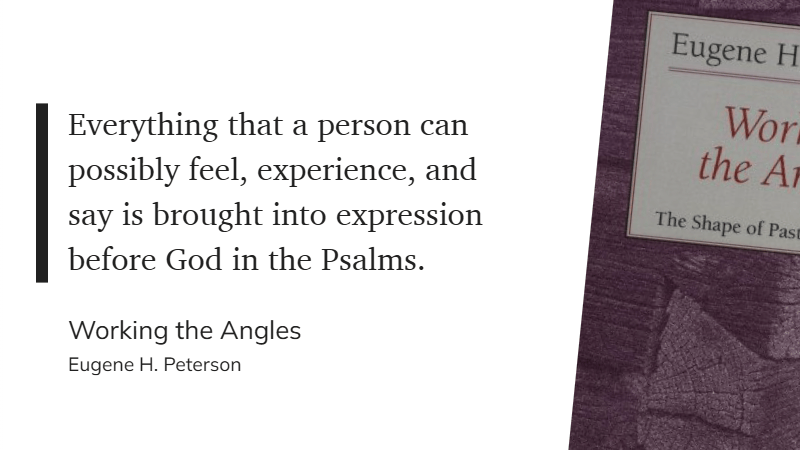

After a hard day’s work of demanding effort there is a place that I long for that is only a moment. It’s just a moment to stop, to cease, to let go, to be still for the sake of being still, sometimes for sanity. And then the ask comes. Not from one place but from several places. Sometimes simultaneously. From my wife, from my daughters, even sometimes the cats. We let go of our moment and give more than we think we have. Sometimes our body language, our sighing, our short words tell a story that rises above that moment of quietness. It screams something deeper and honestly less holy than we often consider. There is a cost when we let go grudgingly of what we want to do in a moment, and it is often the people around us who pay it.
Mark records a day when rest was planned and did not arrive on schedule:
“The apostles returned to Jesus and told him all that they had done and taught. And he said to them, ‘Come away by yourselves to a desolate place and rest a while.’ For many were coming and going, and they had no leisure even to eat. And they went away in the boat to a desolate place by themselves. Now many saw them going and recognized them, and they ran there on foot from all the towns and got there ahead of them. When he went ashore he saw a great crowd, and he had compassion on them, because they were like sheep without a shepherd. And he began to teach them many things.” (Mark 6:30–34, ESV)
Mark takes the need for rest seriously. The invitation came from Jesus Himself, and Mark gives the reason: the apostles had no leisure even to eat. Then the plan meets a crowd. Mark does not tell us whether they rested at all during the crossing. He records what Jesus saw when He went ashore, and why He had compassion: the people were like sheep without a shepherd. The Lord who had just called His apostles to rest answered the crowd’s need by teaching them many things. Both needs were real.
We are often tired. Scripture does not ask us to pretend otherwise. What matters is what we see when the voices calling our name reach us before our rest does. We can see interruptions, or people running up a debt against our patience. We can also see the people we love, each with a need of their own, whether or not the timing suits us.
Paul comes at the same moment from another direction. Writing to a church that prized its spiritual gifts, he insisted that even the most impressive activity without love amounts to nothing, and then he described what love looks like in practice:
“Love is patient and kind; love does not envy or boast; it is not arrogant or rude. It does not insist on its own way; it is not irritable or resentful; it does not rejoice at wrongdoing, but rejoices with the truth. Love bears all things, believes all things, hopes all things, endures all things.” (1 Corinthians 13:4–7, ESV)
“Not irritable or resentful” speaks to the short words. We can complete exactly what was asked and still answer in a way that makes someone reluctant to ask again. It would be easier to be judged by what we did, since we did give more than we thought we had. Paul never mentions sighing, and a sigh can mean nothing worse than exhaustion. But when the sigh or the short word carries resentment, his description of love reaches it. Then the tone reveals the source.
If we are honest, what the sighing and the short words are screaming is leave me alone right now. Needing a few minutes alone is not the problem; Mark has already shown us that. But we can need those minutes and still be wrong in how we ask for them, and when the asking comes out as resentment, the people we love are the ones who feel it. Paul explains what controls his own life, and he roots it in Christ’s love, death, and resurrection:
“For the love of Christ controls us, because we have concluded this: that one has died for all, therefore all have died; and he died for all, that those who live might no longer live for themselves but for him who for their sake died and was raised.” (2 Corinthians 5:14–15, ESV)
Christ died for all so that those who live would no longer live for themselves but for Him, and that purpose reaches us even at the end of a day of giving, when all we wanted was a moment. The resentment that sometimes rides along with our need insists on its own way, and Paul has already told us that love does not. Each person calling our name is someone for whom He died.
None of this means every request must be met the instant it is made. The same Lord who had compassion on the crowd had first called His apostles away to rest. Scripture does not give us a set of steps here, but love might look something like this. We can ask someone to wait without making them feel guilty for asking, by saying honestly that we need a few minutes and asking whether it’s urgent. If it isn’t, we come back when we said we would. When our answer has already come out sharp, we can own it plainly without offering our tiredness as the excuse, rather than leaving the people around us to carry the hurt.
I’ve gone back to the person — my wife, my children — when I am short, when I am impatient, when I am frustrated, and asked them to forgive me. I ask God to forgive me too and pray for more of what’s needed in the heart to not get lost in these moments.
The Shepherd stepped off the boat, saw the crowd that had beaten Him to the shore, and had compassion on them. He is the same Lord who died so that we would no longer live for ourselves. Going back to the people we hurt, and to God, is part of learning to live for Him.
Scripture quotations are from the ESV® Bible (The Holy Bible, English Standard Version®), copyright © 2001 by Crossway, a publishing ministry of Good News Publishers. Used by permission. All rights reserved. ESV Text Edition: 2016.
Drafted with AI assistance from Herbert Berkley’s own words and reviewed by him.

I’ve just received my copy of the newly published Holiness Disrupted: Counter‑formation in the Digital Age. Having followed the author’s life and work for many years, I’m grateful—and delighted—to commend this book as a needed alarm for our time. It is a clear, Scripture‑anchored call to pay attention to the ways our digital habits can quietly erode the holiness Christ died for us to have.
Artificial intelligence, for instance, is simply a tool. And like any tool, it can build or it can break. Technology is a hammer: capable of constructing, delivering, and strengthening—but also capable of distracting, addicting, and destroying. This book offers a crisp, well‑supported guide to cultivating wiser discipline in how we use computers, phones, apps, screens, and the online world that surrounds us.
I’m thankful for David King’s insightful preface, where he observes, “The challenge we now face is learning how to adapt to this new world in a responsible manner…” His words frame the urgency of the book perfectly.
Published by Gospel Armory—with their usual excellence in formatting and design—this volume is worthy of your attention. I wholeheartedly recommend Holiness Disrupted, written by my son, Herb Berkley. (Ordering links are provided below.)
Rededication | June 3, 2021 | by Doy Moyer
There are only a handful of times in biblical Israel’s history in which there were reforms to bring the people back to the Lord. Among the kings of the north (Israel), there were no true revivals. Among the kings of the south (Judah), there were a few, but most notable were the reforms that happened under Hezekiah and Josiah. When Hezekiah led the reforms, the people appeared to dedicate themselves to being faithful (II Chronicles 30-32). Sadly, within a generation or two, that faithfulness waned. Josiah brought back another reform (II Kings 22-23). This, too, only lasted a short time. One of the lessons in these reforms is that every generation must be rededicated to the Lord. No generation may rest upon the accomplishments (or the failures) of those who have gone before. One generation repenting and reforming is no guarantee that the next generation will do so. All will be accountable before the Lord for their own actions, and even within any given generation, there will be those who will not submit themselves to the Lord.
Christians must take stock of their situation, examine their spiritual condition, and rededicate themselves to the Lordship of Jesus Christ. This world makes it easy to slip away slowly so that we become comfortable with our complacency and soon we are adrift with no anchor. Perhaps this is one reason the Hebrews writer gave the warning: “For this reason we must pay much closer attention to what we have heard, so that we do not drift away from it” (Hebrews 2:1). This takes continual diligence.
The year 2020 was hard, a time in which the world was shaken up by a pandemic and its accompanying problems. Churches were very much affected by what happened because of its impact on the assemblies, classes, and other gatherings. Many churches were no longer meeting except online, and for some, this went on for a year or more. Many others, after weeks or months, began the slow process of trying to reestablish their assemblies. The process has been difficult because it was also attended by many disagreements about how to handle the situation. Some churches have divided, and many have found themselves wondering about the future of their respective congregations.
One of the difficulties that some congregations have faced, though, is that they have members who quit coming altogether and, in some cases, do not give much indication that they are coming back. Is it possible that for some Christians, the pandemic made it so that they could essentially disappear without much accountability? Assemblies have also been hit by the fact that some who previously were faithful to the Sunday evening assemblies and midweek Bible classes have not reestablished their previous habits of returning at those times. For some congregations, these absences really show up in their numbers and can be discouraging to many.
The point is not to judge motives or particular circumstances. Rather, we want to encourage each of us to look at our own motives and circumstances and see where we stand. Have we become complacent? Have we established new patterns and habits that now keep us from being with the brethren more? Are we supporting the work of the congregation through our participation in a way that is encouraging and edifying for all? Can we do better, and if so, how will we engage ourselves to this purpose? We can see a time like this as one that damages our spiritual vitality, or we can see it as an opportunity to meet the challenge and grow closer to the Lord and one another. That’s up to us.
Difficult times like this do not get to redefine the work of a local congregation or the body of Christ as a whole. The whole body is still “held together by what every joint supplies, according to the proper working of each individual part, causes the growth of the body for the building up of itself in love” (Ephesians 4:16). While a local congregation may need to make some adjustments from time to time, given that what they do is still within the boundaries of God’s authority, there should still be full participation and active engagement of its members in whatever else they are doing.
Let us see times like this as opportunities to do some soul searching and to rededicate ourselves to the Lord and His will. The world has once again been shown that there is much corruption and death. We can take this in a fatalistic sense that finds no redemption or hope, or we can take it as another indication that this world is truly not our home and that there is something yet far greater to come. If the latter, then we surely want to “be all the more diligent to make certain about His calling and choosing you” by developing our spiritual attitudes to glorify God (II Peter 1:10). Restoration and reformation are but a decision away, and by faith, we can and will endure to the end.

Do you like to study words?
Transform appears in only three verses of the ESV. The first is about the mind: “be transformed by the renewal of your mind” (Romans 12:2, ESV). The second is about the image: beholding the glory of the Lord, we “are being transformed into the same image” (2 Corinthians 3:18, ESV). The third is about the body: Christ “will transform our lowly body to be like his glorious body.” (Philippians 3:21, ESV) In all three the change runs God’s way: toward His will and the Lord’s image, and at last into a body like His Son’s. When Scripture warns about the other direction, it reaches for a different word: “Do not be conformed to this world” (Romans 12:2, ESV).
So the word is narrow, but change is happening to all of us. There are no days where I am not transformed. Much of what shapes us is not something we decided on; it happens to a body living under the sun, where “time and chance happen to them all.” (Ecclesiastes 9:11, ESV) Either way, something is being made of us, and Philippians 3 gives only two ends.
Philippians 3 walks the whole road, and it starts where all of us start. Before we choose anything, we are formed, as the psalmist says: “For you formed my inward parts; you knitted me together in my mother’s womb.” (Psalm 139:13, ESV) Paul’s own list begins with something done to him as an infant: “circumcised on the eighth day, of the people of Israel, of the tribe of Benjamin” (Philippians 3:5, ESV). Nobody eight days old chooses a tribe. Then the list turns to what he made of it: “as to the law, a Pharisee; as to zeal, a persecutor of the church” (Philippians 3:5–6, ESV). Received formation becomes, through repeated choices, a way of living, and Paul’s way of living was aimed squarely at Christ’s people. Paul calls all of it “reason for confidence in the flesh” (Philippians 3:4, ESV). It is physical life, real and partly received, but it is not the life Paul is pressing toward.
Then he met the One he was persecuting (Acts 9:5), and soon after he rose and was baptized (Acts 9:18). Everything he had counted as gain changed columns. “Indeed, I count everything as loss because of the surpassing worth of knowing Christ Jesus my Lord.” (Philippians 3:8, ESV) Everything. That is the response the encounter asks for. Some desires took me away from God, but God gave those desires back in a different form. It was being creative — being a producer. That production was worldly. Now I am a product of what is eternal and eclipses that worldly production. It costs me everything because to embrace it I must die to myself. Paul has a phrase for it: “becoming like him in his death” (Philippians 3:10, ESV). Before the body is ever made like Christ’s glory, the self is made like Christ’s death. Romans names where that death begins. Spiritual life, as distinct from the physical life we were formed with, begins at the waters of baptism, where we are baptized into His death and raised through faith (Romans 6:3; Colossians 2:12) so that “we too might walk in newness of life.” (Romans 6:4, ESV)
And it does not finish in a day. “Not that I have already obtained this or am already perfect, but I press on” (Philippians 3:12, ESV). This is where character is built, slowly, and where we are tempted to turn it into a list we can check off. Transformation is not a checklist. It is a change and shift in the direction of every impulse we are given to own inside of the body. Paul expects God Himself to keep correcting the way we think: “if in anything you think otherwise, God will reveal that also to you” (Philippians 3:15, ESV). That is close kin to the renewal of the mind Romans 12:2 calls for, and it goes on as long as we do.
Paul’s call to the church is plain: “Brothers, join in imitating me, and keep your eyes on those who walk according to the example you have in us.” (Philippians 3:17, ESV) And he will not let us read the chapter as if only one road runs through it. “For many, of whom I have often told you and now tell you even with tears, walk as enemies of the cross of Christ. Their end is destruction, their god is their belly, and they glory in their shame, with minds set on earthly things.” (Philippians 3:18–19, ESV) Whatever repeatedly holds attention eventually shapes worship. They are being changed too, only in the other direction. Their appetite has become their god, and the text names where that road ends. Paul says this with tears, not with a pointed finger. He tells it to the church as a warning, and none of us is past needing it. Is the direction of my impulses toward the cross, or away from it?
Then one small word turns the chapter.
“But our citizenship is in heaven, and from it we await a Savior, the Lord Jesus Christ, who will transform our lowly body to be like his glorious body, by the power that enables him even to subject all things to himself.” (Philippians 3:20–21, ESV)
Here the one doing the transforming is Christ. In Romans we are told to be transformed by the renewal of the mind; here the body is changed by Christ, with a power that subjects all things to Himself. We cannot raise ourselves. We await Him, and we wait as people pressing on. And what He changes is the body itself. The body whose appetites the enemies of the cross serve, and that we are tempted either to indulge or to despise, is the very body He has promised to transform.
He can be trusted with our bodies, because He took a body Himself. Christ was “in the form of God” (Philippians 2:6, ESV), and He took “the form of a servant” (Philippians 2:7, ESV). That was not a transformation. He did not stop being who He is: “Jesus Christ is the same yesterday and today and forever.” (Hebrews 13:8, ESV) What is transformed is us, into His image, and the reason is love. God, “being rich in mercy, because of the great love with which he loved us,” made us alive with Christ (Ephesians 2:4–5, ESV). The One who took the form of a servant is the One who will change our lowly body.
The chapter holds both ends of a life. On the other road the end is destruction. On this one it is a glorious body like His. We are all being changed into something. The question the text leaves us is into whose image.