
Do You Believe What Jesus Believed, #2

Do You Believe What Jesus Believed?

#2

“Belief in Jesus” means many different things to many people. In some cases it is simply an acknowledgment that He existed and was a good man, a prominent figure in history: “Yes, I believe that” these people would say.

To others their belief in Jesus goes a little further. “He was a good man and I want to follow His example of kindness and justice.”

For Christians belief in Jesus Christ runs much deeper. We believe Jesus Christ to be the Only Begotten Son of God, deity in the flesh, who came in fulfillment of prophecy, lived perfectly, died on the cross, was raised from the dead and ascended to the right hand of the Father, where He is now – as Head of His church and our Mediator. Our purpose is not just to affirm these truths, but to live in every way as He has directed, written in the New Testament. We believe what Jesus believed! Do you?

What Did Jesus Believe About Creation?

In our post-modern world, many would put this question into the arena of debate or speculation. Some would offer, “we don’t really know what Jesus believed about creation.”

Here’s where I start: JESUS WAS THERE! Not only was He there. He was not just a witness or observer. He was active in that miraculous work. “In the beginning was the Word, and the Word was with God, and the Word was God. He was in the beginning with God. All things were made through Him, and without Him was not anything made that was made,” (Jno. 1:1-3). If you are a Christian, this is what you believe! “All things were made through Him.”

Further, Jesus spoke clearly about the creation of man and woman. He said that God “created them from the beginning,” making them “male and female,” (Matt. 19:1-6). The first couple were not biological accidents. The original pair was fashioned “male and female” (two genders), not an asexual blob. Adam and Eve existed “from the beginning.” This is what Jesus believed about creation. He knew this “For by Him all things were created … all things were created through Him and for Him!” (Col. 1:16).

Once we get the identify of Jesus right, what He believed about creation becomes a clear and objective conclusion. He was there.
Do You Believe What Jesus Believed, #1

Do You Believe What Jesus Believed?

#1

“And whatever you do in word or deed, do all in the name of the Lord Jesus, giving thanks to God the Father through Him,” (Col. 3:17).

If you are a Christian, that means you regard everything Jesus said to be the truth. You not only believe what the Bible says about who He was, who He is and what He did. You believe everything Jesus said is the truth. Thus, whatever you do in word or deed, you do “in the name of the Lord Jesus, giving thanks to God the Father through Him.”

It is to be observed and then regretted, there are people in our time who speak with favor about Jesus Christ, even voicing their trust in Him. Yet, when they begin to vent their opinions and beliefs, it is clear they don’t believe what Jesus believed.

In this series of articles I’ll describe this conflict with what Jesus believed, urging readers to accept in full everything Jesus believed, and live by that truth.

Do You Believe What Jesus Believed About The Old Testament?

The Old Testament documents God’s creative work, His dealings with His nation prior to the cross, including the prophecies that the Savior, Jesus Christ, would arrive and, doing God’s will, offer Himself for sinners.

“The Old Testament books provide vital background for what we read in the New Testament.”[i]

What did Jesus believe about the Old Testament? He made it clear. “Do not think that I have come to abolish the Law or the Prophets; I have not come to abolish them but to fulfill them,” (Matt. 5:17). Did Jesus not believe in what He came to fulfill? His words fervently articulate His belief in what He came to fulfill.

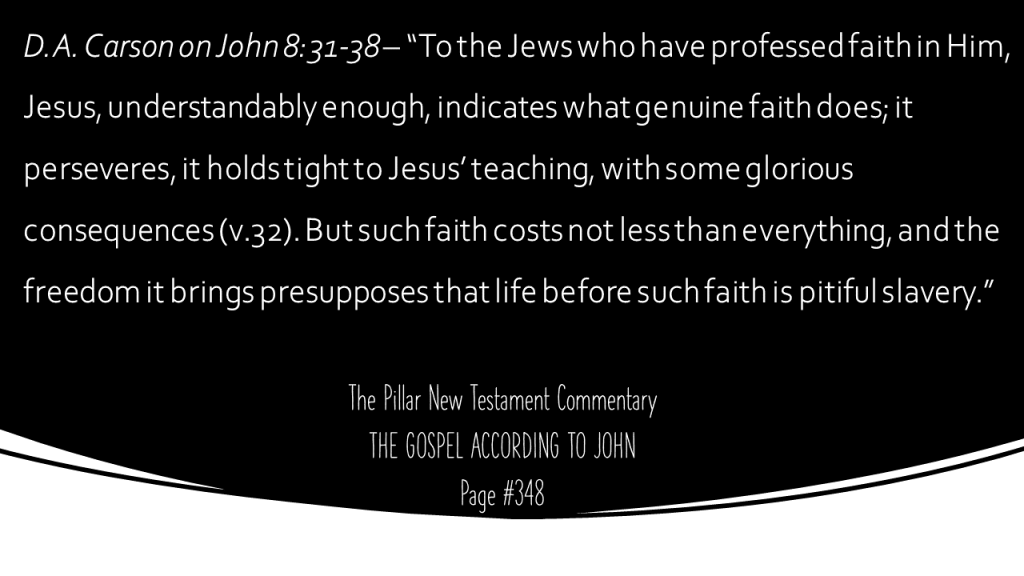
“Jesus’ attitude toward the Old Testament Scriptures now becomes unmistakably clear. Because they are His Father’s words, far from being abolished or subverted, they are to be fulfilled to the last-minute detail, and, even more significantly, He was to fulfill them!” ii

What about those stories in the Old Testament many reject, like Jonah being swallowed by a great fish? Jesus spoke of that event with full confidence that it really happened. He said, “Jonah was three days and three nights in the belly of the great fish,” (Matt. 12:40).

Jesus acknowledged the Old Testament, appealed to it for authority and in a case of rebuke toward the Sadducees, He said they did not understand the Scriptures nor the power of God (Matt. 22:29-32).

If I believe in Jesus, I believe what He believed about the Old Testament. And I believe He came to fulfill it. He is the mediator of the New Covenant (Heb. 9:15).

i Foundation for Growing Christians, by Doy Moyer, p.#11

ii Earnhart, Paul. Invitation to a Spiritual Revolution . DeWard Publishing Company. Kindle Edition.


Divine Promises

{Not original with me. Cannot locate the source but worth a look}

God’s presence — “I will never leave thee” (Hebrews 13:5)


God’s protection — “I am thy shield” (Genesis 15:1)


God’s power — “I will strengthen thee” (Isaiah 41:10)


God’s provision — “I will help thee” (Isaiah 41:10)


God’s leading — “And when He putteth forth His own sheep, He goeth before them” (John 10:4) 


God’s purposes — “I know the thoughts that I think toward you, saith the Lord, thoughts of peace, and not of evil” (Jeremiah 20:11) 


God’s rest — “Come unto Me, all ye that labor and are heavy laden, and I will give you rest” (Matthew 11:28) 


God’s cleansing — “If we confess our sins, He is faithful and just to forgive us our sins, and to cleanse us from all unrighteousness” (1 John 1:9) 


God’s goodness — “No good thing will He withhold from them that work uprightly” (Psalm 84:11) 


God’s faithfulness — “The Lord will not forsake His people for His great name’s sake” (1 Samuel 12:22) 


God’s guidance — “The meek will He guide” (Psalm 25:9)


God’s wise plan — “All things work together for good to them that love God” (Romans 8:28) 

Knowledge, Confidence & A Prohibition, 1 Jno. 5:13-20

Knowledge, Confidence & A Prohibition (1 Jno. 5:13-20)

13 I write these things to you who believe in the name of the Son of God, that you may know that you have eternal life. 14 And this is the confidence that we have toward him, that if we ask anything according to his will he hears us. 15 And if we know that he hears us in whatever we ask, we know that we have the requests that we have asked of him.

16 If anyone sees his brother committing a sin not leading to death, he shall ask, and God will give him life—to those who commit sins that do not lead to death. There is sin that leads to death; I do not say that one should pray for that. 17 All wrongdoing is sin, but there is sin that does not lead to death.

18 We know that everyone who has been born of God does not keep on sinning, but he who was born of God protects him, and the evil one does not touch him.

19 We know that we are from God, and the whole world lies in the power of the evil one.

20 And we know that the Son of God has come and has given us understanding, so that we may know him who is true; and we are in him who is true, in his Son Jesus Christ. He is the true God and eternal life.

Since full faith in Christ had been challenged by deceivers, John uses considerable ink to instill confidence in his readers. Here is that phrase, “that you may know that you have eternal life.” Note the previous paragraph is loaded with “testimony,” which links directly to their knowledge and confidence they were able to have toward God.

Part of this confidence is, “He hears us.” However we are warned not to ask God to forgive the impenitent (those who keep on sinning). We can and should pray for the penitent (those who commit sins not leading to death).

God’s people do “not keep on sinning.” If we sin, John has already instructed us how to reacts (1 Jno. 1:7-2:2). The confidence theme continues: “…we know that the Son of God has come and has given us understanding.” One understanding we have is to “keep ourselves from idols.”

-web

Come Back Tomorrow

Come Back Tomorrow?

(Prov. 3:27,28)

Warren E. Berkley

“Do not withhold good from those to whom it is due, when it is in the power of your hand to do it. Do not say to your neighbor, ‘Go, and come back, and tomorrow I will give it,’ when you have it with you,” (Prov. 3:27,28, NKJ).

This is a call to generosity but it is written as a prohibition (“do not”). Here’s a little “secret” of good Bible study: When you read a prohibition, spend some of your study time focusing on the opposite. So when you read, “do not lie,” think of the value of honesty. When you come to “do not forget” God’s law (Prov. 3:1), consider how important it is to remember God’s law. Every prohibition has some positive opposite. The point of the prohibition is not only to keep us from sin, but to take us to that positive opposite.

In this case, “do not withhold good” is a call to generosity, sharing, benevolence. Whatever we have that is subject to sharing, we should be willing to give with those “to whom it is due.”

The hard part of this is figuring out “to whom it is due,” or (NIV), “those who deserve it.” To give profusely to undeserving recipients is obviously not wise. But it is often not clear or easy to make those calls. Seems that the line between deserving and undeserving is not always easy to discern. But I would say to us these things:

1. God doesn’t expect us to see everything He is able to see. God can look right through the externals to the internal motives, and God has in His perfect mind – Instant Background Checks on everybody. God knows that we have no such powers. So there is no expectation that we have perfect knowledge of every prospective recipient of our goodwill. We can only act on what we are able to know.

2. Never cancel a duty because it is qualified. Could be, we become so obsessed with the qualification (“those who deserve it”) we just cancel the duty, thinking the work is too imprecise or demanding. Generosity (as directed by God) involves the hard work of wisdom, discernment, good stewardship and prayer; that’s part of the sacrifice of giving. Good responses to God and people are never subject to human anger, whim, greed or emotion. It should not become such a burden (deciding who is worthy), that we just toss the whole duty aside.

3. Don’t let your experience with the undeserving lead you to deny the deserving. Most of us have heard people say something like, “I gave this guy some help, and he turned out to be a thief. So I just don’t help people anymore.” That’s reactionary, creates suffering for the deserving and puts you squarely against the will of God. Your experience should never be the basis of your generosity. The basis of all giving is, you are a recipient of God’s grace and responsible to obey Him.

Paraphrase, Prov. 9:13-16

Hyperbole Alert: The woman SOCIAL MEDIA is loud; she is undisciplined and without facts. She sits in your phone or computer, on a seat at the highest point of the society, calling out to those who log in, who go straight on their way to her posts. “Let all who are simple come in here,” she says to those who lack judgment.  

– OK, that was on my mind when I read the passage in my Daily Bible Reading.  See the real thing in Prov. 9:13-16.

Hope for the lost

A Power The World Cannot Withstand (1 Jno. 5:1-5)

Everyone who believes that Jesus is the Christ has been born of God, and everyone who loves the Father loves whoever has been born of him. 2 By this we know that we love the children of God, when we love God and obey his commandments. 3 For this is the love of God, that we keep his commandments. And his commandments are not burdensome. 4 For everyone who has been born of God overcomes the world. And this is the victory that has overcome the world—our faith. 5 Who is it that overcomes the world except the one who believes that Jesus is the Son of God? – 1 Jno. 5:1-5

This doesn’t say that everyone can overcome the world and be saved. No. It says that everyone “who believes that Jesus is the Christ,” (1) has been born of God, (2) loves the Father, (3) loves God and obeys His commandments, (4) doesn’t consider those commandments to be burdensome, and (5) can, by that active faith, overcome the world. That’s the victory of this passage.

It is for anyone, everyone who is in the class or relationship identified: Believers in Christ.

This passage, therefore, is loaded with hope for people who have no spiritual family and are living day by day under the pressure of what the world wants them to do. The hope and victory is found by coming and being an obedient believer!

Does faith really need to express itself in obedience? Read the passage again. The faith that overcomes the world not only accepts the truth about Jesus Christ, that faith obeys the commandments of God and doesn’t find those commandments to be burdensome but necessary.

Christians first

We Are Christians First

Are you a Christian? If you are, that relationship to God should govern everything you do about everything all the time. When you first obeyed Christ in baptism, you were making the commitment to be a Christian and to be a Christian first.

You have a job, but you are a Christian first. Everything you do as an employee should be governed by your higher calling. “…obey in all things your masters according to the flesh, not with eye-service, as men-pleasers, but in sincerity of heart, fearing God,” (Col. 3:22).

You are a neighbor, but you are a Christian first. Your treatment of your neighbor should be based on your love for the God who made your neighbor (Jas. 3:9; Matt. 22:36-40).

You are a member of a local church, hopefully, one that exists and works with full respect for the teachings of Scripture. Your ultimate loyalty is to Jesus Christ, the head of the universal church (Eph. 1:22-23). If there is ever a conflict between the group and the Head, your commitment is to the Head (Col. 2:19).

You may be a citizen of the United States, but you hold higher citizenship in Christ’s kingdom (Col. 1:13; Phil. 1:27, 3:30). Our higher citizenship should rule over all our involvement in our American citizenship. Everything we do as good citizens here should be a function of our higher citizenship.

In all that we do, we are Christians first. Our relationship to God through Jesus Christ ought to empower and enable all that we do from baptism until death. Our first identity is, a Christian.

“But seek first the kingdom of God and His righteousness, and all these things shall be added to you,” Matt. 6:33.