Philippians 2
Perfectly Sequenced
Warren E. Berkley
In any form of communication, sequence is useful. In our educational system, sequential learning is present in grade levels. Text books start in the early chapters with the simple and move toward more complex material. Speeches have an introduction, body and conclusion. Movies, plays, concerts. We process information and interact in various ways that seem to always involve sequence. (This is the first paragraph of this article!)
Sequence is present in Scripture. The work of creation had divine sequence that was perfect (Genesis 1). The Ten Commandments were sequenced (honoring God was the starting place. In the genealogies and patriarchal transition, there was “the first born.” When Jesus spoke a “conflict resolution” process He said go to the brother who sins against you FIRST, “between you and him alone,” then if that doesn’t yield resolution, follow the other steps. And, of course, “seek first the kingdom of God,” (Matt. 6:33). Sequence or progressive learning is one of the keys to good communication, oral or written.
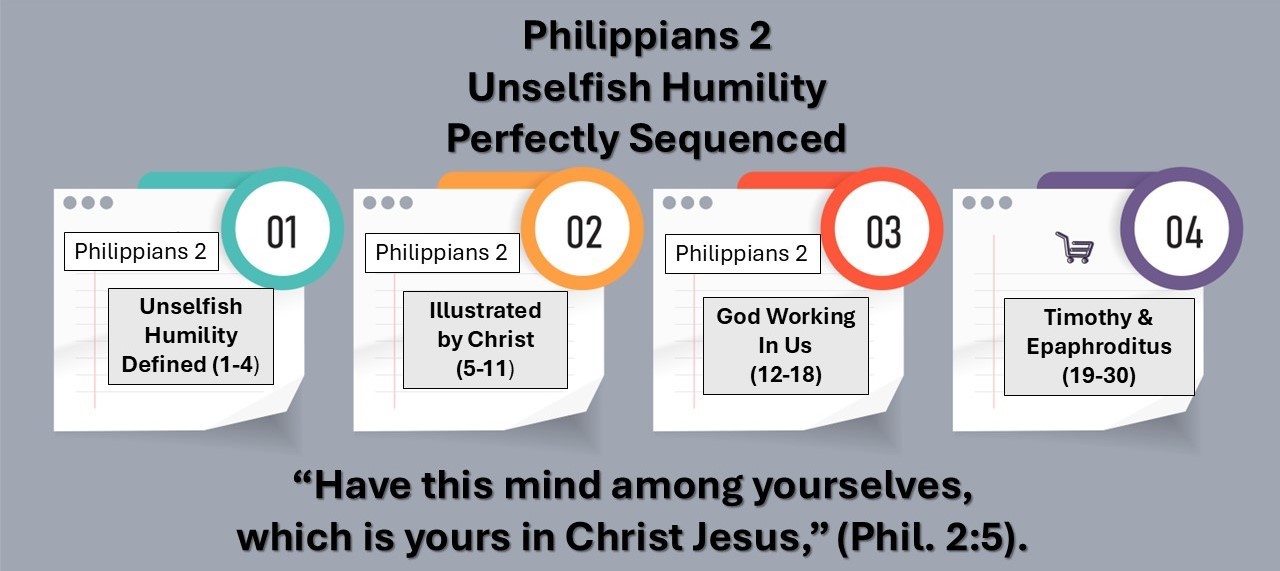
The Holy Spirit is a perfect communicator. I saw this recently in studying and teaching from Philippians chapter two. Read the chapter and discover the sequence. See if it looks something like this:
* Unselfish Humility Is Defined (Vss. 1-4)
* Unselfish Humility Is Illustrated by Christ (Vss. 5-11)
* Unselfish Humility Is God working in us (Vss. 12-18)
* Unselfish Humility Is Demonstrated by Timothy and Epaphroditus (Vss. 19-30)
The way this is written is easy to remember. It is perfectly sequenced for our learning.
Then there is the challenge to adopt this way of thinking that was illustrated by Christ; to let God work through me in such a way, like Timothy and Epaphroditus, I’m not driven by selfish ambition. I look out, not only for my own interests but first, the interests/welfare of others. See, even when sequence makes learning easy, there is the challenge of personal application.