
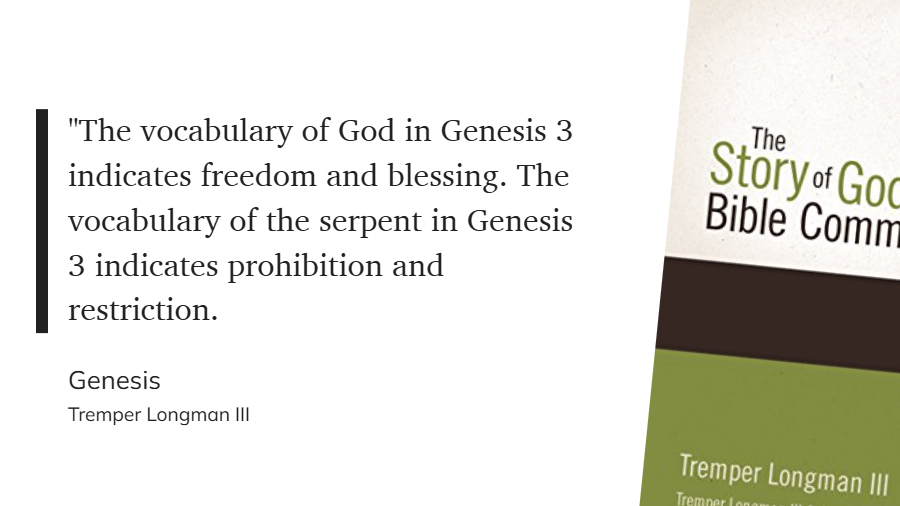
God and Satan, talking difference language

By Herb Berkley
Yesterday, I noticed a man outside a Burger King, moving slowly and steadily with a pressure hose, rinsing down the entryway before the doors opened. This morning, he was inside, tending to yet another ordinary task. His hands were busy, but his face told the fuller story—a quiet dissatisfaction, a heaviness that seemed deeper than tiredness. What rose in my mind was the word drudgery—that weight we all feel when life’s routines drain more than they give.
Drudgery is the moment when effort loses meaning. It is the slow unravelling of joy, the place where purpose feels thin and life begins to fold inward. Every human being eventually encounters this state, because in a fallen world, work carries the mark of the curse:
“By the sweat of your face you shall eat bread…”
—Genesis 3:19 (ESV)
Yet Scripture doesn’t leave us there. God does not deny the ache of labor; He reframes it. In Christ, the burden of drudgery is not erased, but it is transformed.
Paul captures this transformation in one of the most quietly revolutionary statements in the New Testament:
“Whatever you do, work heartily, as for the Lord and not for men.”
—Colossians 3:23 (ESV)
With one sentence, Paul shifts the center of work away from the self and onto the Savior. Meaning is no longer rooted in the task or in the approval of people, but in the God who receives the labor as worship. Work that feels unnoticed by the world becomes fully noticed by heaven.
This is the subtle, powerful shift that lifts drudgery into devotion. A believer’s repeated, ordinary motions—cleaning, teaching, repairing, typing, lifting, driving, cooking—become a pattern of worship offered to God. The task does not need to be glamorous; it needs only to be given to Christ.
Paul reinforces this dignity of simple labor in another passage:
“…aspire to live quietly, and to mind your own affairs, and to work with your hands…”
—1 Thessalonians 4:11 (ESV)
Quiet work is not beneath God. God Himself blesses it. He breathes meaning into it. Even Solomon, after wrestling with the apparent futility of toil, reaches this conclusion:
“There is nothing better… than that he should… find enjoyment in his toil. This also… is from the hand of God.”
—Ecclesiastes 2:24 (ESV)
Joy does not rise from the task itself—it comes from God’s hand resting upon it.
When a Christian offers even the smallest task to Christ, something unseen but real happens. The monotonous becomes meaningful. The hidden becomes holy. The repetitive becomes a pattern of Christlike formation. Drudgery becomes service. The tedious becomes testimony. The thankless becomes treasured in the eyes of God.
The world may never acknowledge the man outside Burger King.
He may never know the impact of his work.
But the Father sees.
As the Hebrew writer reminds us:
“God is not unjust so as to overlook your work and the love that you have shown for His name…”
—Hebrews 6:10 (ESV)
God does not overlook labor done in love. He does not overlook patterns of faithfulness. He does not overlook the unseen offerings of everyday life. And because He does not overlook them, the believer’s daily rhythms—especially the difficult ones—become places where the Lord strengthens, shapes, and steadies the heart.
Christ does not promise that work will always feel inspiring. But He ensures that work done for Him is never wasted. And this transforms the internal experience of drudgery. The believer begins to realize that the smallest act offered to Christ carries eternal weight.
So if your task today feels beneath you…
if your work feels endlessly repetitive…
if your enthusiasm feels thin:
Offer it to God.
Let drudgery become a pattern of devotion.
Let repetition become remembrance.
Let the ordinary become the altar.
Because wherever Christ stands with you, drudgery cannot consume you.
It becomes worship.
It becomes formation.
It becomes a pattern through which God quietly reshapes the soul.
As the end of the year approaches and I receive the invoice for Berk’s Blog, each year I try to objectively evaluate if I should continue. There is a cost associated with producing this blog; it seems to increase a little each year. So I have weigh the financial against the practical (not a simple equation.)
This year I’m asking for your feedback. Do you check every time there is a post? Do you find these helpful? Have you noticed my son’s contribution to the effort? How can I improve this individually provided platform?
Thank You

There are places in the heart we hold tight—small shadows we defend, old comforts we protect, desires we pretend are harmless. They are not always obvious sins. Sometimes they are nostalgia for a former identity… a way of thinking… an internal pattern that felt like home before Christ called us out of darkness.
Paul calls these “deceitful desires” (Ephesians 4:22, ESV).
They are deceitful precisely because they feel like comfort.
Sin rarely begins with rebellion.
It begins with desire, James says—“each person is tempted when he is lured and enticed by his own desire” (James 1:14, ESV). Desire influences and speaks: “Just keep this one thing. You don’t have to let everything go.” And we listen, because letting go feels like losing a part of ourselves.
This is why some wounds never heal.
Not because God refuses to heal them, but because we grip them as if they were life itself.
If we are honest, we do not cling to the dark places because they terrify us—we cling because something inside us still desires what lived in the dark. We fear that surrender will leave us empty. We fear that confession will tear open an identity we built long before we belonged to Christ.
Paul sees this conflict clearly. He speaks of the “old self, which belongs to your former manner of life and is corrupt through deceitful desires” (Ephesians 4:22, ESV).
The old self is not a costume you remove—it is a deep pattern of desire you once lived inside. Thus, stepping into the new self is not merely behavior change; it is identity surrender.
This is the identity crisis we rationalize.
We tell ourselves:
“I can follow Christ and still keep this part of who I was.”
“I will surrender everything except this piece.”
“I’ll walk in the light, but this corner of darkness is mine.”
But darkness, even in small doses, cannot coexist with the light of Christ. And grace, though abundant, cannot fill a place we insist on keeping closed. David understood this well. His prayer in Psalm 139 is not rhetorical—it is desperate:
“Search me, O God, and know my heart… see if there be any grievous way in me” (vv.23–24, ESV). He knew he might cling to things he didn’t even recognize. He knew desire could deceive him. He knew his heart needed to be opened, not defended.
Examination is the door.
Confession is the hinge.
Repentance is the turning.
Grace is the flood.
But the flood comes only when the door opens.
This is why confession is always paired with identity.
Paul tells us that through the Spirit we cry, “Abba! Father!” (Galatians 4:6–7). Sons release what orphans cling to. Sons trust the Father with what orphans hide. Sons walk in the light because they know the One who stands there loves them.
The real issue is not comfort.
It is identity.
We hold onto former desires because they once told us who we were—powerful, desirable, in control, secure, satisfied. But Christ reveals those identities as illusions. To cling to them now is to cling to a life that no longer exists.
The new self cannot be worn over the old self.
It requires the burial of the former life, the release of deceitful desires, and the honesty that admits, “I want this… but I want Christ more.”
Grace stands ready.
But grace is a surgeon, not a decorator.
It will not dress the wound we clutch as identity.
It will heal—but only when the hands open.
So the call today is not dramatic.
It is vulnerable:
Be honest about what you still desire.
Be brave enough to expose it.
Be humble enough to release it.
Be confident enough to believe that the Father will meet you there.
Where the heart releases, grace enters.
Where the old self dies, the new self rises.
Where the wound is opened, the healing begins.
Ponderings
1. What desire from your former life still feels like comfort to you?
2. Where do you sense an internal “identity tug-of-war” between who you were and who God calls you to be?
3. What would it look like today to open your hand and release what you’ve been clinging to?

