Good Reading
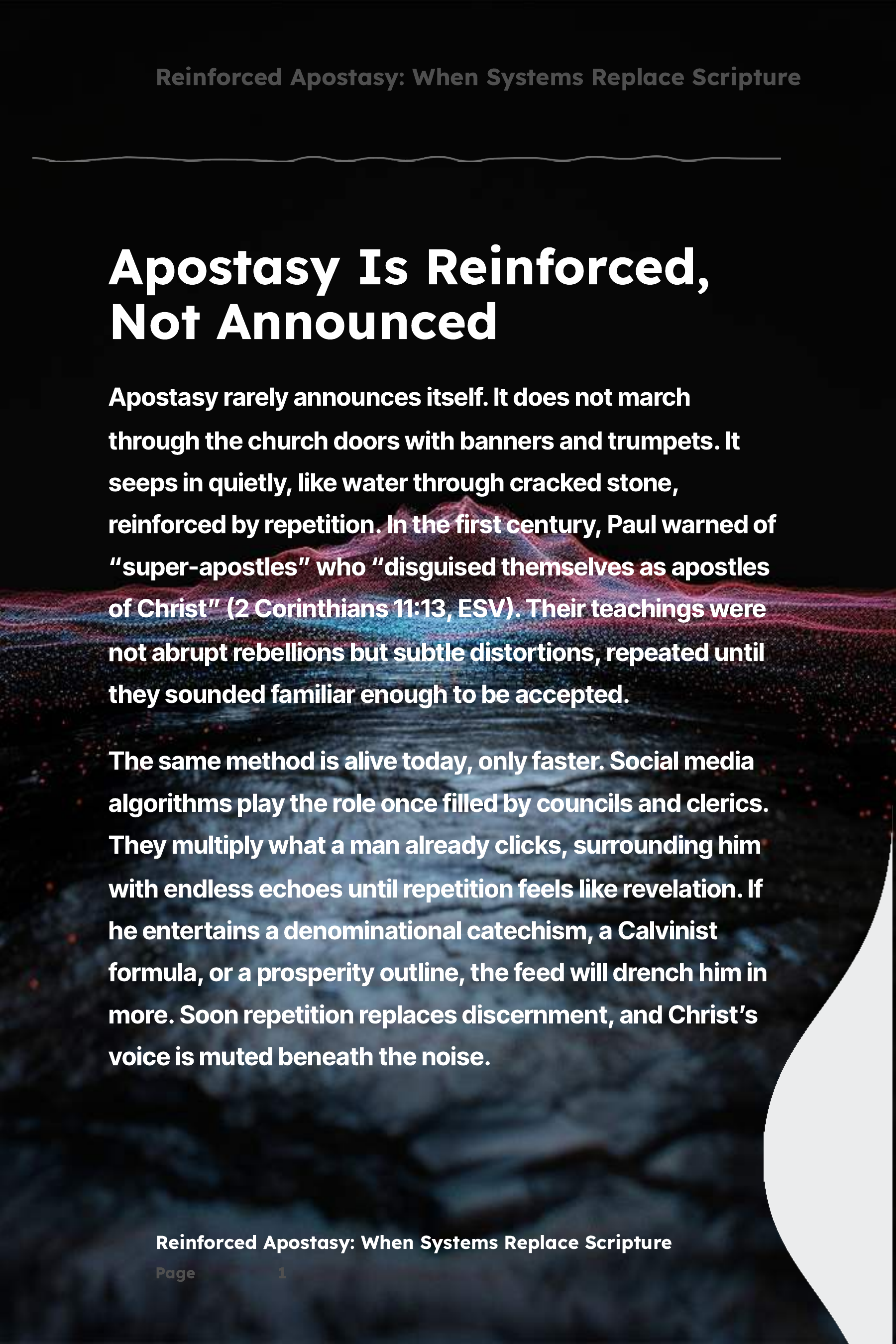
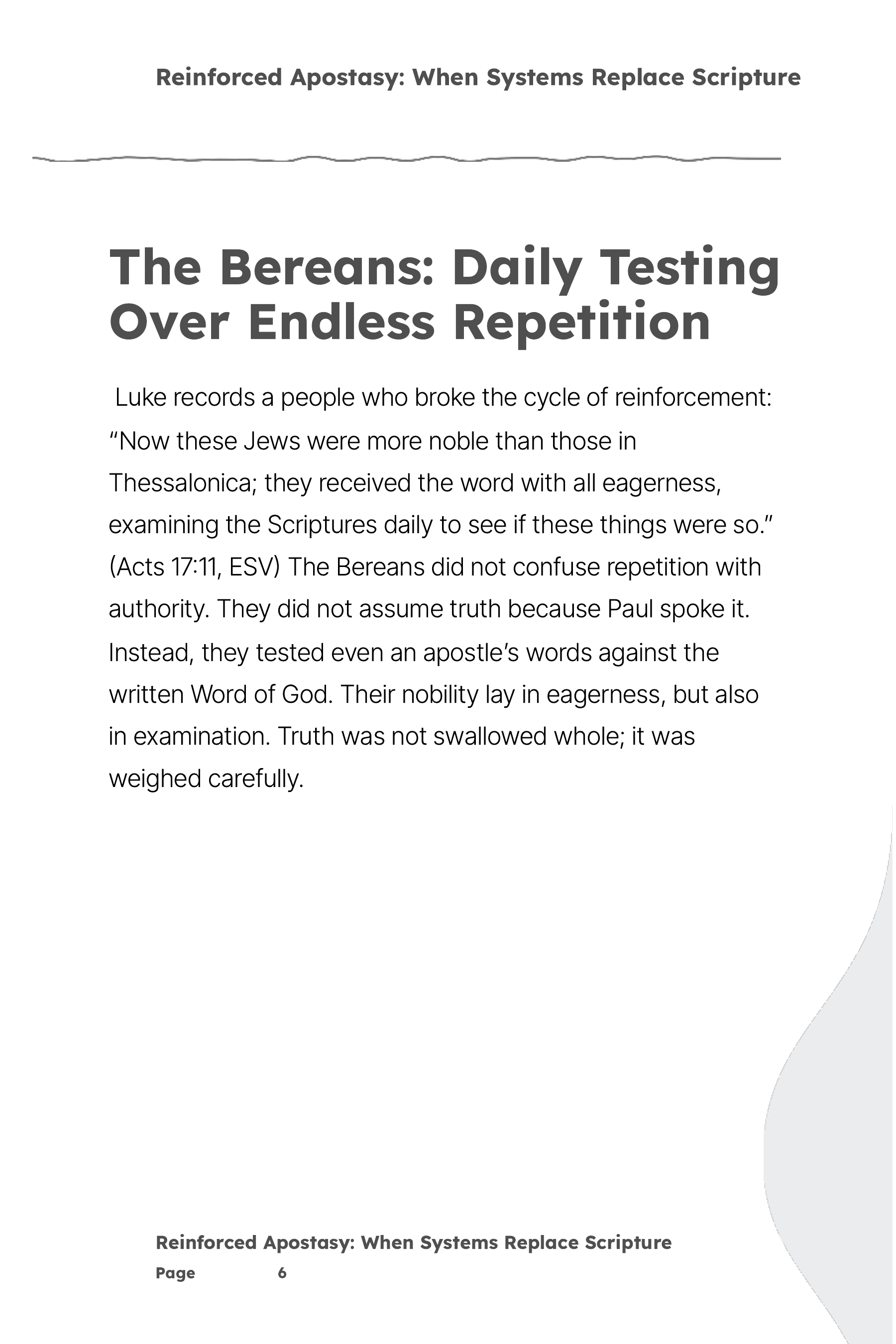
The social media feed is not neutral. It multiplies what men already prefer, echoing catechisms and systems that go beyond the authority of Christ. Repetition begins to feel like revelation, and allegiance shifts quietly. But the Bereans show another way: they examined the Scriptures daily, testing every word by what God had spoken. Apostasy is reinforced daily—so fidelity must be reinforced daily.
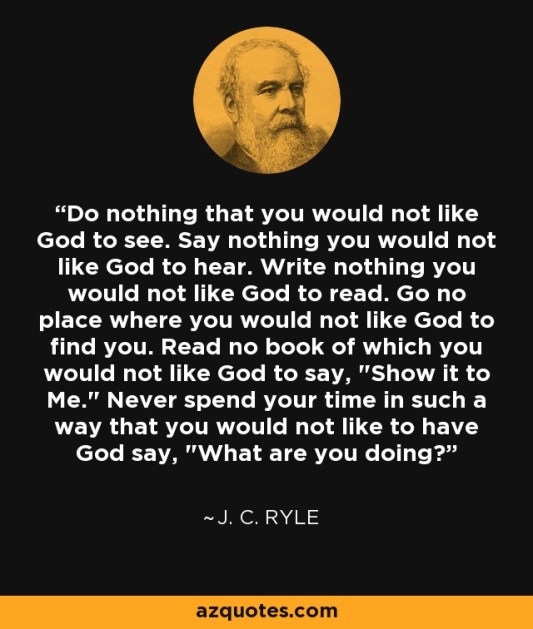
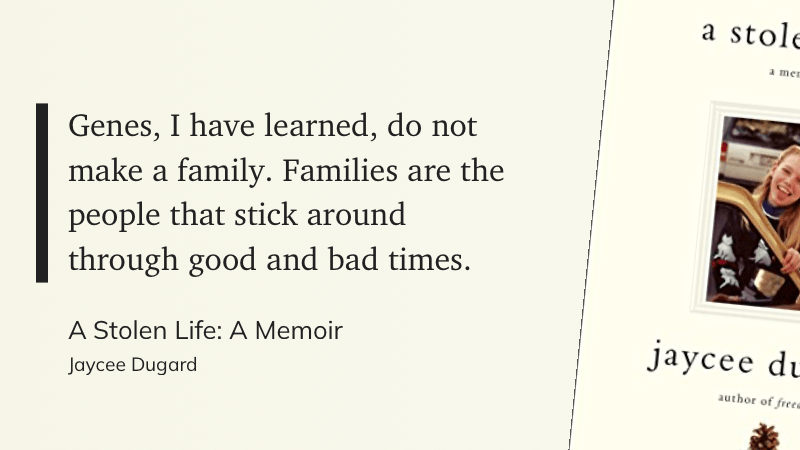

To stop at the point of culpability is to stop short of grace.
The conference room smelled faintly of burnt coffee and old decisions. A dozen circled the table while the slide deck cycled through metrics that looked good until they didn’t. They had launched fast, loudly, beautifully—and then the bug surfaced. Customers found it before they did. The graph of customer complaints was painful to watch.
When the numbers were kind, everyone spoke in the first person: I pushed that feature. I fought for that timeline. But when the director asked, “Who signed off on the final build?” the air thinned. Eyes slid toward the floor. Pronouns shifted: They, the team, the process. Credit had many parents. Failure had none.
One person’s mouth stayed closed. A sentence climbed their throat and then turned around. They had approved the build. They knew the risk. But ownership felt expensive in that moment—like paying a bill they didn’t want to see. So they told themselves a softer truth: It wasn’t only me. It was everyone in the room.
That is how the human heart works. We carry responsibility right up to the point where it turns into culpability—and then we often set it down.
This reflex isn’t new stuff. It is ancient stuff.
In the garden, God’s voice cut through leaves and fear: “Have you eaten of the tree of which I commanded you not to eat?” Adam’s answer sparkled with logic and leaked with blame: “The woman whom you gave to be with me, she gave me fruit of the tree, and I ate” (Genesis 3:11–12). He pointed sideways and upward—toward Eve and even toward God. Eve followed the choreography: “The serpent deceived me, and I ate” (v. 13).
Both statements contained facts. Both dodged ownership. Humanity has been eloquent at partial confession ever since.
We love responsibility when it sounds like honor. We retreat when it smells like guilt.
Culpability is a heavy word—Latin culpa, fault or blame. Think of responsibility as the wide field where callings and tasks live. Culpability is the narrow gate inside that field where responsibility collides with guilt. It is the moment ownership costs us something because it tells the truth about us.
We edge toward that gate and then pivot away.
This is the half-life of human ownership. It fades just before it becomes true.
When Nathan stood before David and told the parable of the stolen lamb, the king could have argued. Kings do. Instead, he answered with a straight line: “I have sinned against the Lord” (2 Samuel 12:13). No hedging. No PR. No committee-crafted statement that admits nothing and grieves everything.
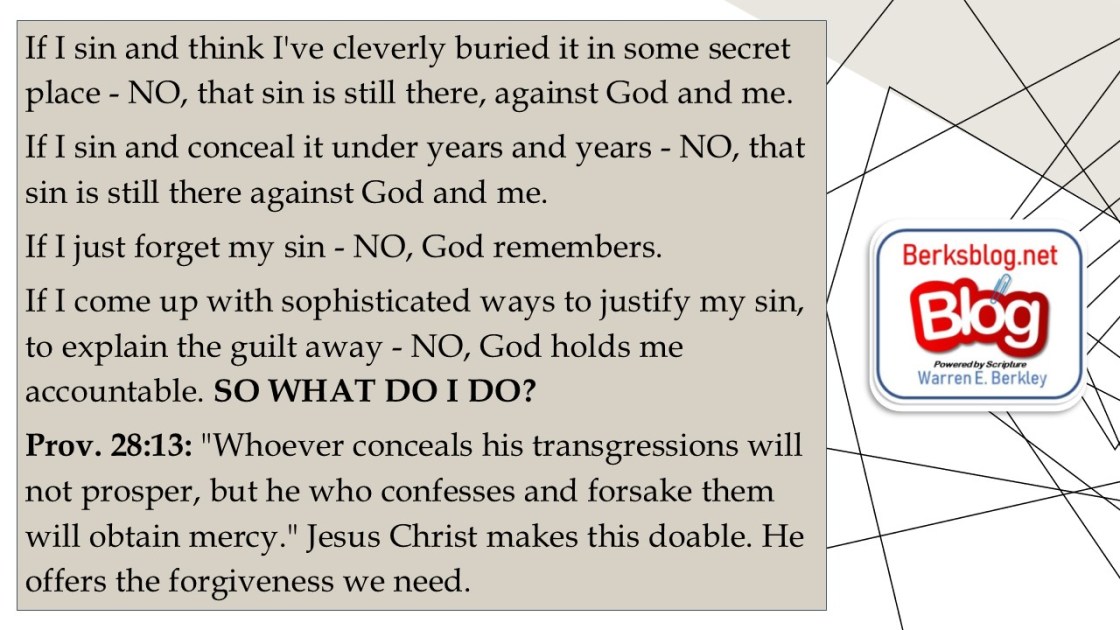
His confession did not erase consequence—his house felt the tremors for years—but it opened a door heavier hands cannot. “Whoever conceals his transgressions will not prosper, but he who confesses and forsakes them will obtain mercy” (Proverbs 28:13). The path isn’t complicated. It is simply hard on pride.
If David shows the shape of real ownership, Jesus shows its summit. “For our sake he made him to be sin who knew no sin, so that in him we might become the righteousness of God” (2 Corinthians 5:21).
Jesus did not skirt culpability; He shouldered it. Not His own—ours. Every thread of blame, every drop of wrath, every indictment written in ink we cannot scrub—He carried all of it to a cross that felt like the meeting point of justice and mercy. The cross is the tree of surrender and the bridge over the abyss. There, our worst shame met God’s deepest embrace.When we find ourselves reluctant to accept the Father’s grace wouldn’t we think about it during the Lord’s supper? Think about how he carried mine, and yours, then place it up against all humanity that ever existed from beginning to end.
Where we deflect, He steps forward. Where we explain, He intercedes. He did not search for another shoulder to take the weight. He became the Lamb who takes away the sin of the world.
We tell ourselves three things:
To stop at the point of culpability is to stop short of grace. “If we confess our sins, he is faithful and just to forgive us our sins and to cleanse us from all unrighteousness” (1 John 1:9).
The door we avoid is the doorway home.
We live in a culture fluent in non-apologies. Politicians double down. Corporations issue statements engineered to absorb outrage without admitting fault. Even congregations sometimes shuffle furniture in the dark rather than open a window.
Meanwhile, our devices catechize us into algorithmic self-protection. Feeds learn what we reward and flatter our tribe. We curate ourselves into echo chambers where we are always the protagonist and rarely the prodigal.
The Kingdom teaches another grammar. Truth is a steel spine, not a trend. Confession is not demolition but renovation. Freedom is not indulgence but chains falling. Obedience is a compass aligned north. Repentance is turning the wheel before the highway ends.
In that conference room, the silence eventually broke. One voice rose: “I signed off.” It did not fix the bug. It did not reverse the graphs. But it put their feet back on the only road God blesses: the path where truth plants roots deep enough to hold when storms arrive.
Later, at home, that same person sat at the table with a child who had lied to cover a mistake. They talked about the cost of telling the truth. They talked about the cross. They talked about why their house would always choose honesty, even when it hurt—because that’s where mercy meets us. And they remembered aloud how Jesus bore infinitely more than we will ever own.
This was not theater. It was discipleship. A training of the heart to run toward the God who already knows.
HEB